
Google Cloud, part of Alphabet (Nasdaq: GOOGL), has released TPU Sync, an open-source library that moves model state across TPU accelerator memory, host memory, storage and networks. The software is aimed at a growing AI-serving constraint: getting large key-value caches and updated model weights to the right resources without leaving accelerators idle.
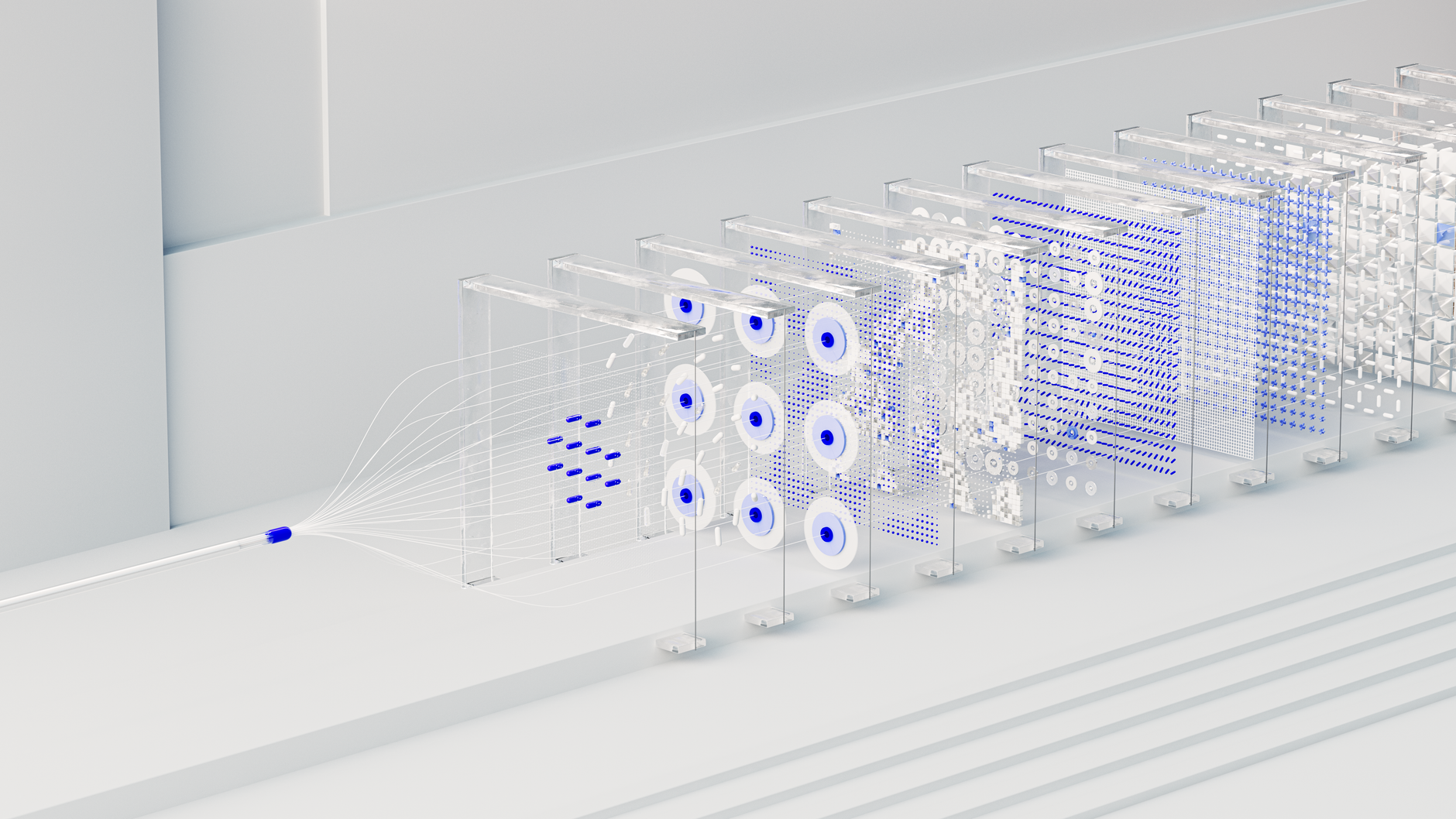
The library uses native C++ and asynchronous direct memory access transfers to move tensors while computation continues, rather than copying data through higher-level software layers. Google Cloud said TPU Sync can keep data in its TPU-oriented layout as it moves between high-bandwidth memory, host DRAM and the data-center network, reducing conversion and serialization work.
That design addresses a practical problem in long-context, multi-turn and high-concurrency inference. A model’s key-value cache grows as it processes a session, but accelerator memory is limited. When a serving stack must repeatedly rebuild context or wait for cache data to cross the network, the delay can hurt time to first token and waste expensive accelerator capacity in production.
TPU Sync creates a multi-tier cache that can extend beyond accelerator memory into host DRAM and, experimentally, local or shared storage. It also supports disaggregated serving, where one set of nodes handles prompt prefill and another generates tokens. In that setup, the library is designed to stream processed context from prefill nodes to decode nodes while allowing work to continue.
Google Cloud reported that its internal tests on large mixture-of-experts models showed more than a 90% reduction in key-value transfer overhead in some configurations. The company also reported lower time-to-first-token results and higher token throughput under specified test conditions. Those figures are vendor benchmarks, not independent measurements, and will depend on model size, traffic patterns and TPU deployment configuration.
The library connects with JAX and PyTorch environments and is integrated with TPU-oriented paths for vLLM, SGLang and llm-d. It also exposes lower-level primitives for reinforcement-learning pipelines, where trainers must distribute refreshed weights to inference samplers that generate rollout data.
Adopting the library does not eliminate normal serving design choices. Teams still need to decide cache-retention rules, capacity boundaries and fallback behavior when a host or TPU slice is unavailable. The new transfer layer is intended to make those choices easier to execute at scale, but it does not replace workload isolation, observability or capacity planning.
For IT teams operating large AI services, the change matters because the performance limit increasingly sits outside the model’s raw arithmetic. Long prompts, shared instructions and ongoing agent sessions can create large caches that must be retained, moved and reused efficiently. A separate model-state layer can help infrastructure teams focus on memory hierarchy and data movement instead of treating those tasks as opaque behavior inside an inference server.
TPU Sync is available now in open source with Python packages for JAX and PyTorch. The practical tradeoff is that it is specialized infrastructure: organizations need compatible TPU environments and should validate the company’s benchmark claims against their own models, concurrency levels and latency targets before treating the reported reductions as production expectations.